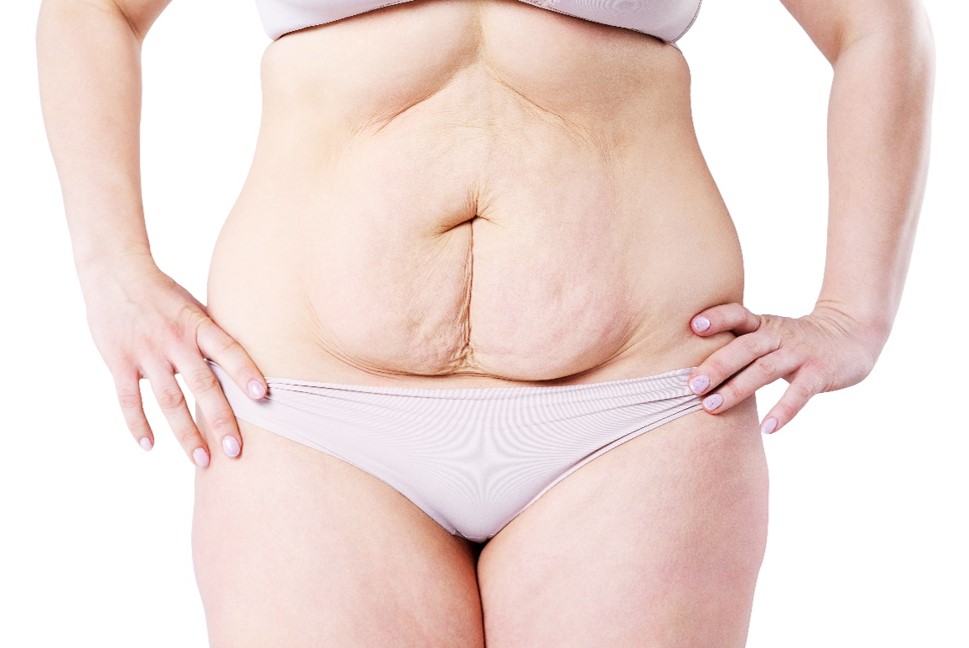
Why does the abdomen change?
Weight changes, pregnancy and gravity cause the skin and abdominal wall to lose firmness over time. The rectus muscles often separate, a condition known as diastasis recti, and the abdomen stops responding to exercise or diet.
What types of tummy tuck are available?
Not every patient needs the same surgery. The choice depends on skin laxity, the amount of fat and the condition of the abdominal wall.
Mini tummy tuck. For slim patients with loose skin only in the lower abdomen. The scar is slightly longer than a C-section scar; a small amount of skin is removed and the muscles below the belly button are repaired, without changing the belly button. It can be combined with extensive liposuction.
Modified tummy tuck. For patients with more skin laxity who do not need a full tummy tuck. The scar is somewhat shorter than in a conventional procedure, and the approach to the belly button depends on whether it sits high or low. It can be combined with more limited liposuction.
Full tummy tuck. For patients with significant loose skin and fatty tissue. The scar runs from hip to hip, the muscles are repaired from above the belly button down to the pubic area, and the belly button is repositioned. It can be combined with liposuction of the flanks and back.
What result are we looking for?
A natural-looking abdomen that preserves the contours of your anatomy and is in proportion to the rest of your body.
Does it leave scars?
Yes. The scar's length depends on the type of tummy tuck: it may be slightly longer than a C-section scar or extend from hip to hip. It is positioned to be covered by underwear or a swimsuit and improves over time, reaching maturity at around eighteen months.
Recovery and anesthesia
Surgery takes three to five hours, depending on the type of tummy tuck. Recovery takes two to three weeks, and wearing a compression garment for twelve weeks is essential. It is performed under general anesthesia, administered by a board-certified anesthesiologist, after a cardiovascular assessment. The final result is assessed at one year.
Frequently Asked Questions
What is diastasis recti?
A separation of the abdominal muscles, often following pregnancy. A tummy tuck repairs this separation.
What kind of abdominoplasty do I need?
That depends on the amount of loose skin and fat and the condition of your abdominal muscles. We assess these during your consultation.
How long does recovery take?
Two to three weeks, with a compression garment for twelve weeks.
Can it be combined with liposuction?
Yes. The extent of liposuction depends on the type of tummy tuck.
How long does surgery take?
Three to five hours, depending on the type.
When can I see the final result?
At one year; the scar finishes maturing at around eighteen months.